For many parents, carrying a baby soon feels completely natural. Your baby is close to you, surrounded by your warmth and movement, and at the same time, your hands are free. Still, there are a few small things that don’t always go smoothly at first. That’s perfectly normal. Carrying is something you learn as you go.
Sometimes a baby is positioned just a little too low, the wrap or carrier is a little too loose, or there’s too much fabric covering the baby’s face. Fortunately, these are all minor adjustments that are easy to fix. With the right position, carrying often becomes more comfortable right away for both parent and baby.
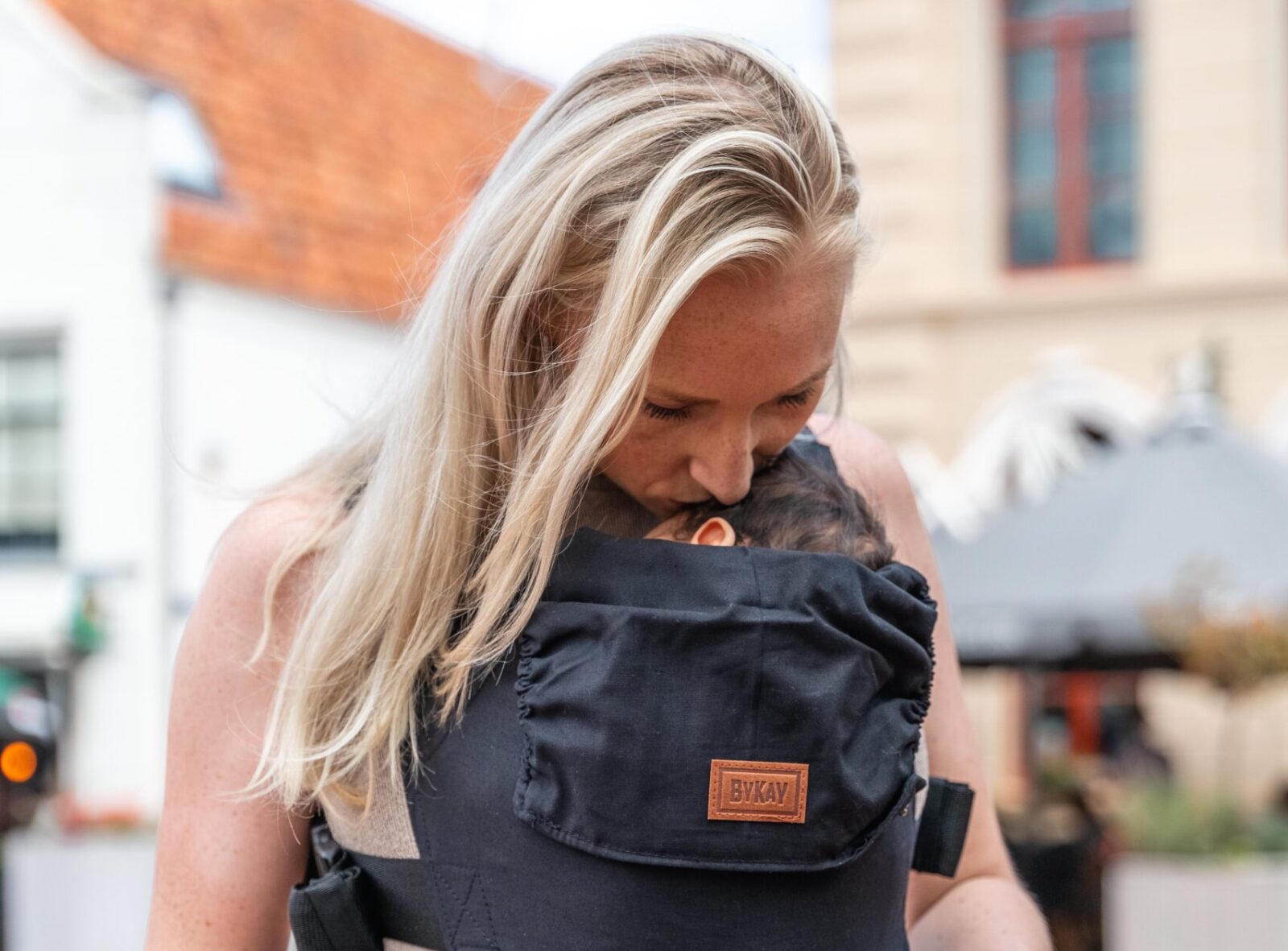
One of the most common mistakes when carrying a baby is placing the baby too low. Many parents position the baby carrier at about stomach or hip level, which causes the baby to sit lower against the body.
For ergonomic carrying, it’s actually better to carry your baby higher. A helpful guideline is that you should be able to easily kiss your baby’s head simply by tilting your head forward slightly. This is also known as the “kissing height.”
When your baby is positioned higher, their body rests more comfortably against your chest. Their weight is then distributed more evenly across your body, making it feel easier to carry them. This position also often feels more soothing for your baby, as they are closer to your breathing and heartbeat.
Many parents are cautious when putting on a baby carrier. They don’t want to fasten their baby too tightly, so they leave a little extra room. However, a carrier or sling that’s too loose can result in your baby not being supported properly.
If the baby carrier isn’t tight enough, your baby will slowly slide down. This can cause the weight to pull more on your shoulders and make your baby less stable. A carrier that’s too loose makes carrying feel much heavier, because you’ll have to compensate to stay balanced together.
A baby carrier should therefore fit snugly. Your baby should be held close against your body so that you form a single unit. Think of it as a tight hug: comfortable, yet supportive.
Veel nieuwe ouders merken dat dragen direct lichter aanvoelt wanneer de babydrager goed is aangespannen.
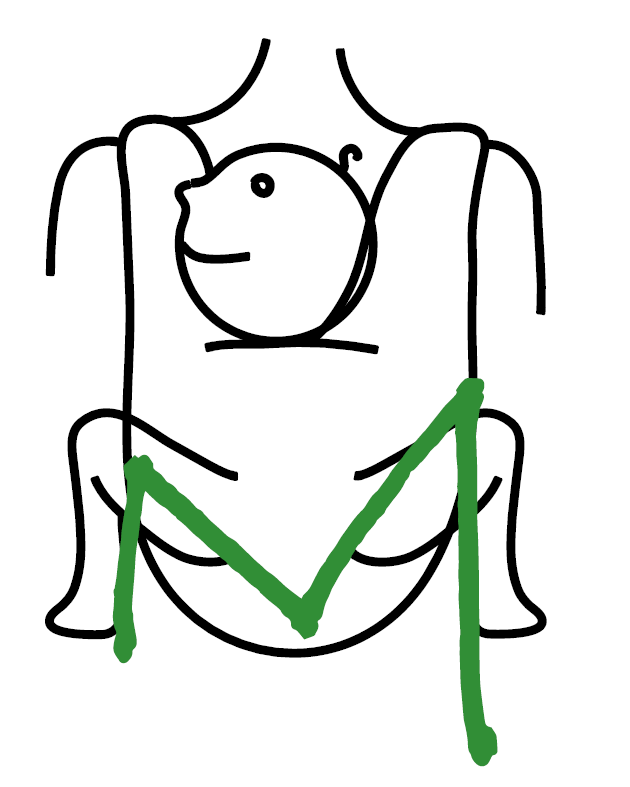
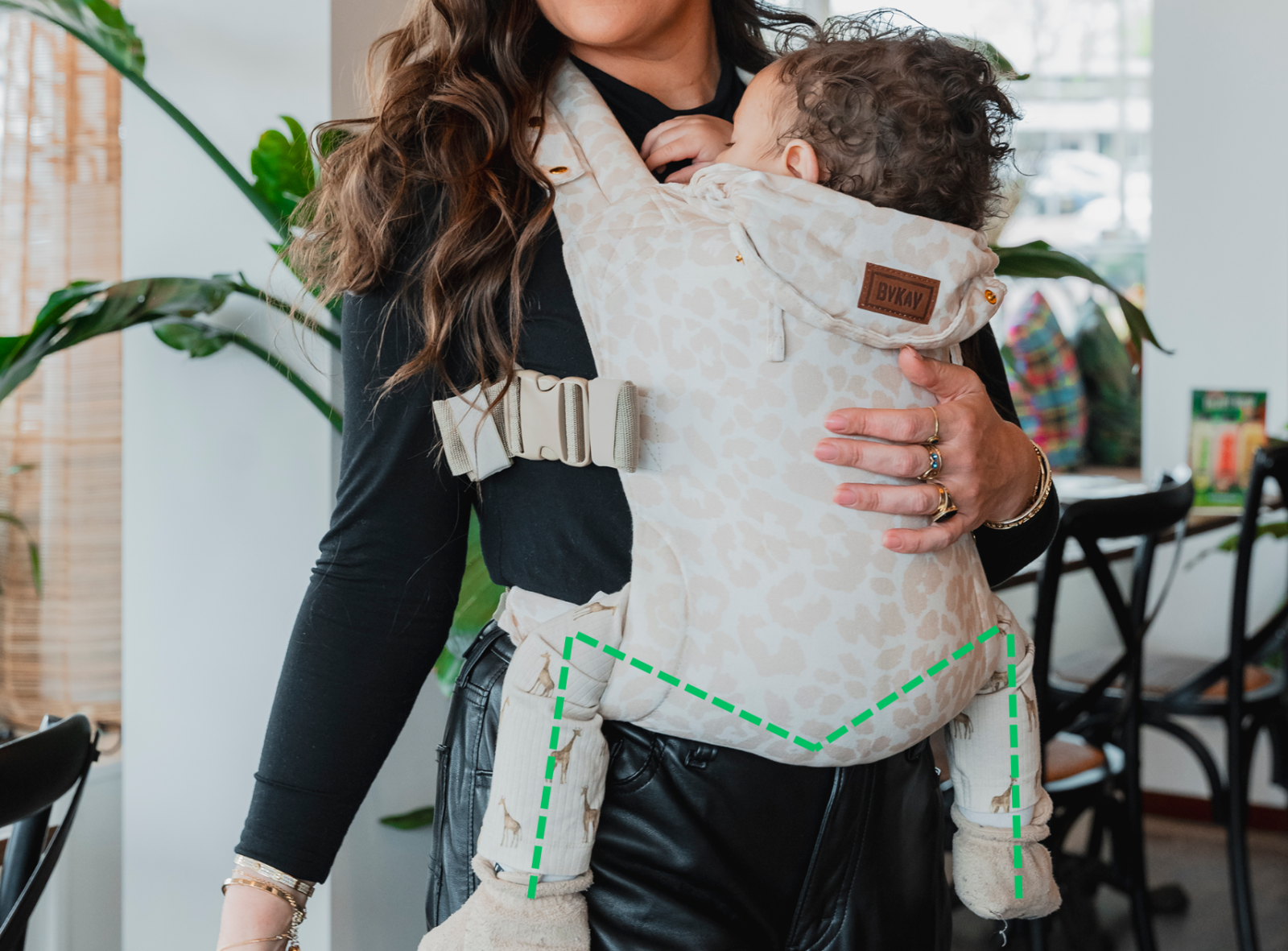
Good posture is important for comfortable carrying. When carrying your baby ergonomically, their knees should be slightly higher than their bottom. This is also known as the frog position or the ergonomic M-position.
If your baby’s legs hang too low or aren’t properly supported, it can be uncomfortable for them. The seat of the baby carrier should therefore provide support from the back of one knee to the back of the other.
Also make sure the fabric is positioned properly under your baby’s bottom, creating a sort of seat. This helps maintain the natural curve of the back.
This position allows your baby to sit comfortably while providing good support for their body.
Another issue that sometimes arises is that there is too much fabric near the baby’s face. If the fabric of the baby carrier is too high, it can partially cover the baby’s face.
It is important that your baby’s face remains clearly visible and unobstructed at all times. The chin should not be pressed against the chest, and there must be enough space for the baby to breathe freely. The shoulder strap of a baby sling can be flipped over or adjusted slightly to ensure that the baby’s face and airways remain clear.
It’s always a good idea to quickly check that your baby can breathe freely when you place them in a baby sling or carrier, just as you would in any other situation (when putting them to bed, placing them in the playpen, etc.).
Carrying your baby doesn't have to be perfect right from the start. Most parents figure out what works best for them and their baby as they go along.
By ensuring the carrier is at the right height, fits snugly, supports an ergonomic M-position, and leaves enough space around the face, carrying your baby often becomes more comfortable right away.
And when everything is just right, that’s exactly what makes babywearing so special: your baby close to you, relaxed against your body, as you go about your day together.
