You hear it all the time: choose anergonomic carrier. But ultimately, the most important question is: how do you carry your baby ergonomically? Because even with the best baby carrier, how you use it is just as important. Ergonomic carrying is all about posture, support, and comfort—for your baby and for you.
In this article, you'll learn what to look out for and how to make sure that the way you carry things is truly ergonomic.
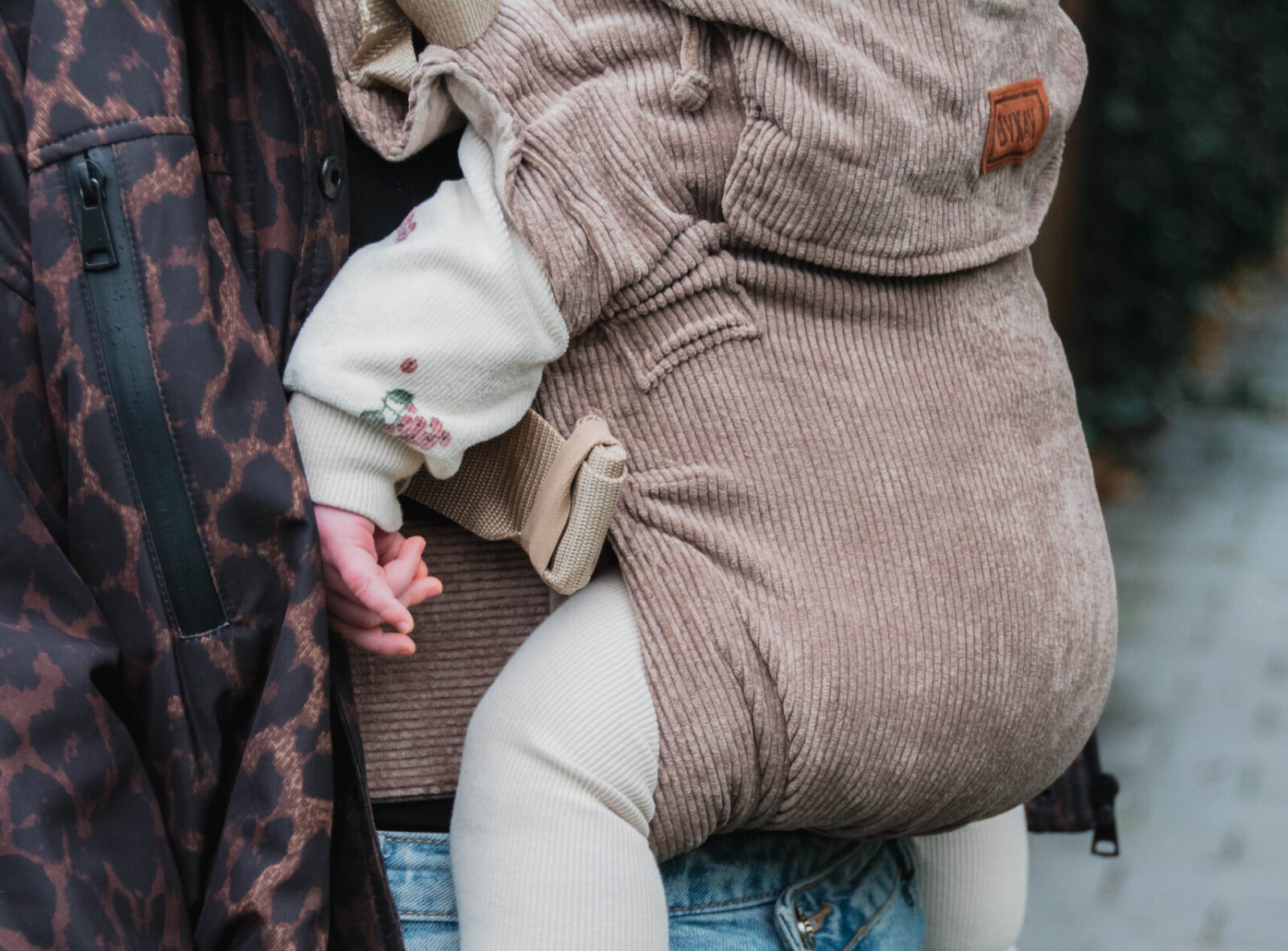
Before we look at the how, it’s worth taking a moment to consider what ergonomic carrying entails. Ergonomic means that something is designed to fit the body and support its natural posture. For babies, this primarily concerns the healthy development of the hips and spine. For parents, it’s about proper weight distribution and preventing back, neck, or shoulder pain.
A good ergonomic baby carrier can help with this, but proper adjustment and positioning make all the difference.
The key to using a baby carrier ergonomically starts with your baby’s position. Here are the most important points:
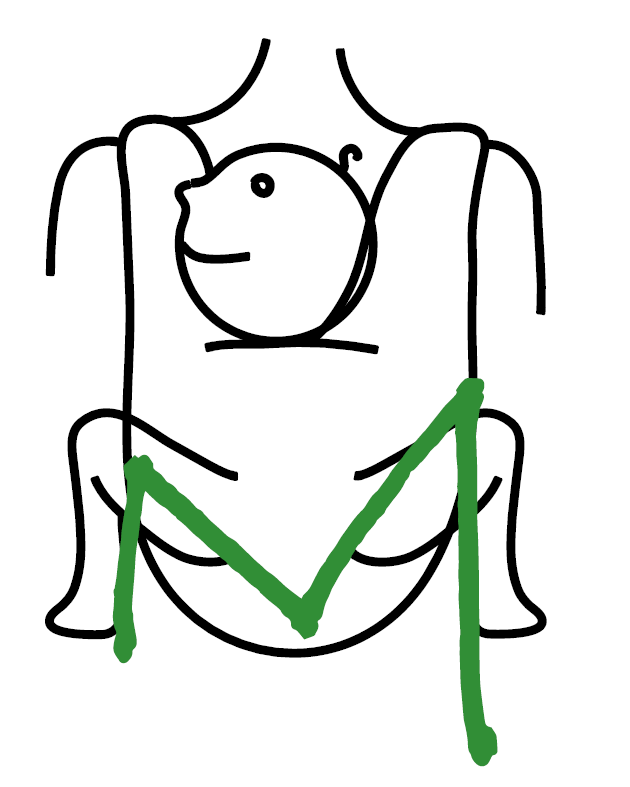
Your baby’s legs should be positioned in an M-shape: knees higher than the buttocks, with support from the back of one knee to the back of the other. This ensures a natural hip-spreading position and reduces pressure on the hip joint.
Babies naturally have a rounded back. That curve should be preserved. So don’t force them into a straight posture; an ergonomic carrier actually follows the natural curve of their back.
Your baby is sitting high enough when you can kiss him or her on the head without having to bend over. Holding your baby close to your chest provides stability and security. This way, you feel like one.
Ergonomic babywearing isn't just about your baby—it's about you, too. A properly adjusted ergonomic carrier distributes the weight across your shoulders and hips.
If the baby carrier is too loose, you’ll feel like you have to compensate while moving and provide extra support with your hands. If it’s too tight, it feels uncomfortable, and you and your baby might feel a bit confined. When the weight is distributed properly, your baby doesn’t feel heavy, and you feel like one. Experiment to find what’s comfortable for both of you!
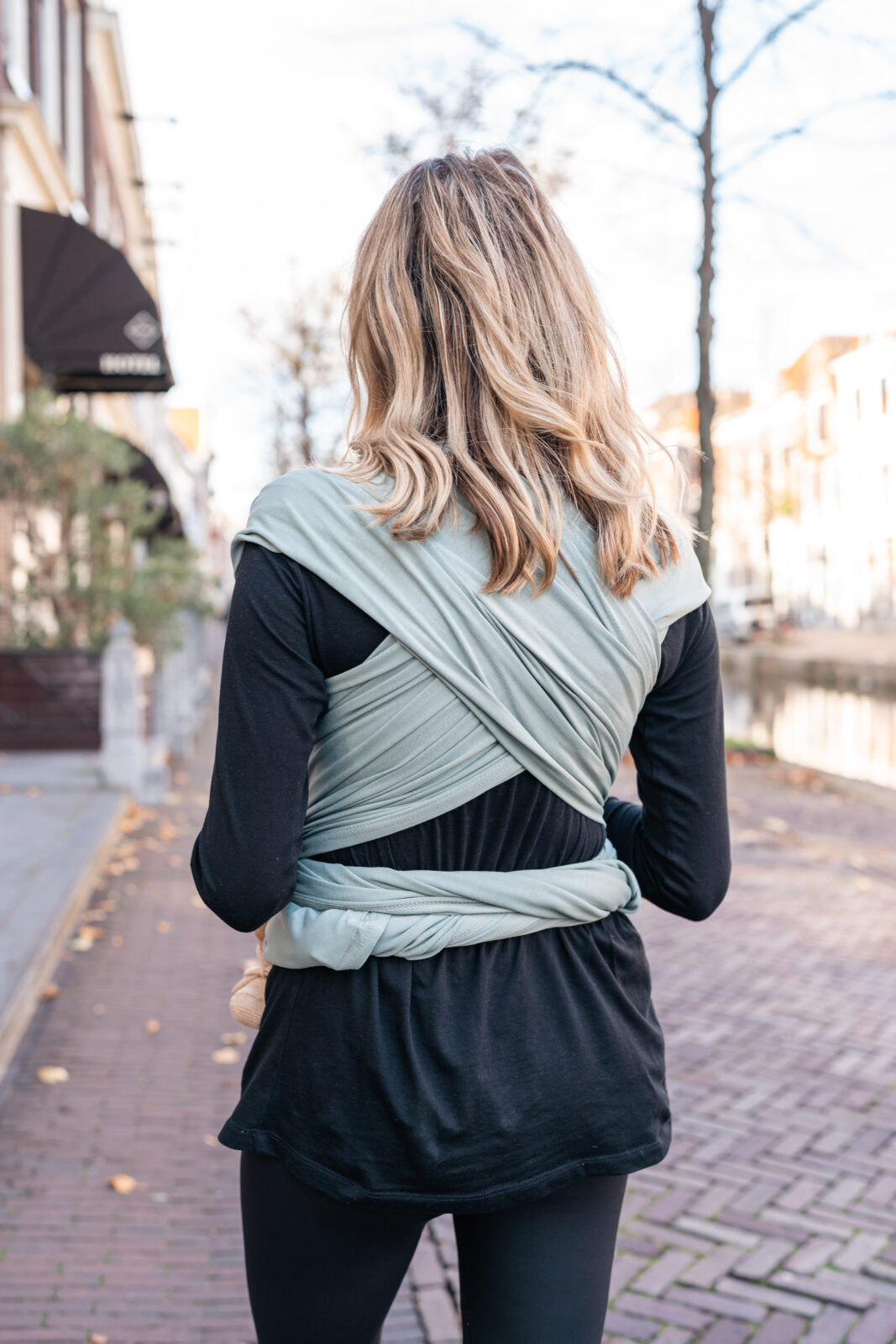
A truly ergonomic baby carrier provides support:
Make sure the seat is wide enough; this ensures that the baby carrier is properly adjusted.
Carrying your baby in an ergonomically correct manner supports their natural development. The M-position is recognized worldwide by hip specialists as a healthy position for young babies, as it ensures that the femoral head remains securely seated in the hip socket.
In addition, carrying helps with regulation. The closeness, your warmth, and your movement support your baby’s nervous system. Babies who are carried close to their parents often feel more calm and secure. Movement while carrying, such as walking, can even have a calming effect on heart rate and breathing.
For you as a parent, carrying your baby ergonomically helps prevent strain. Especially during the first year, when you’re lifting your baby a lot, a proper carrying position makes all the difference.
Even with an ergonomic carrier, small mistakes can creep in:
Not sure? Look in the mirror or take a photo from the side. That way, you can quickly see if the M-posture is clearly visible. Or send us a photo or video so we can take a look with you.
From newborn to toddler: ergonomic carrying remains important. As your baby grows, you can extend the back panel and adjust the shoulder straps. Our ergonomic baby carriers grow with your child and continue to provide support through various stages of development.
How do you carry a child ergonomically? By paying attention to posture, support, and adjustment. An ergonomic carrier is the foundation, but your awareness makes all the difference. Close, natural, and balanced—that’s what ergonomic carrying is all about.
Your baby's position:
Your comfort:
PS. Word je voor het eerst ouder? Op onze First Time pagina delen we onze ervaringen, zodat jij beter voorbereid begint 🙂
