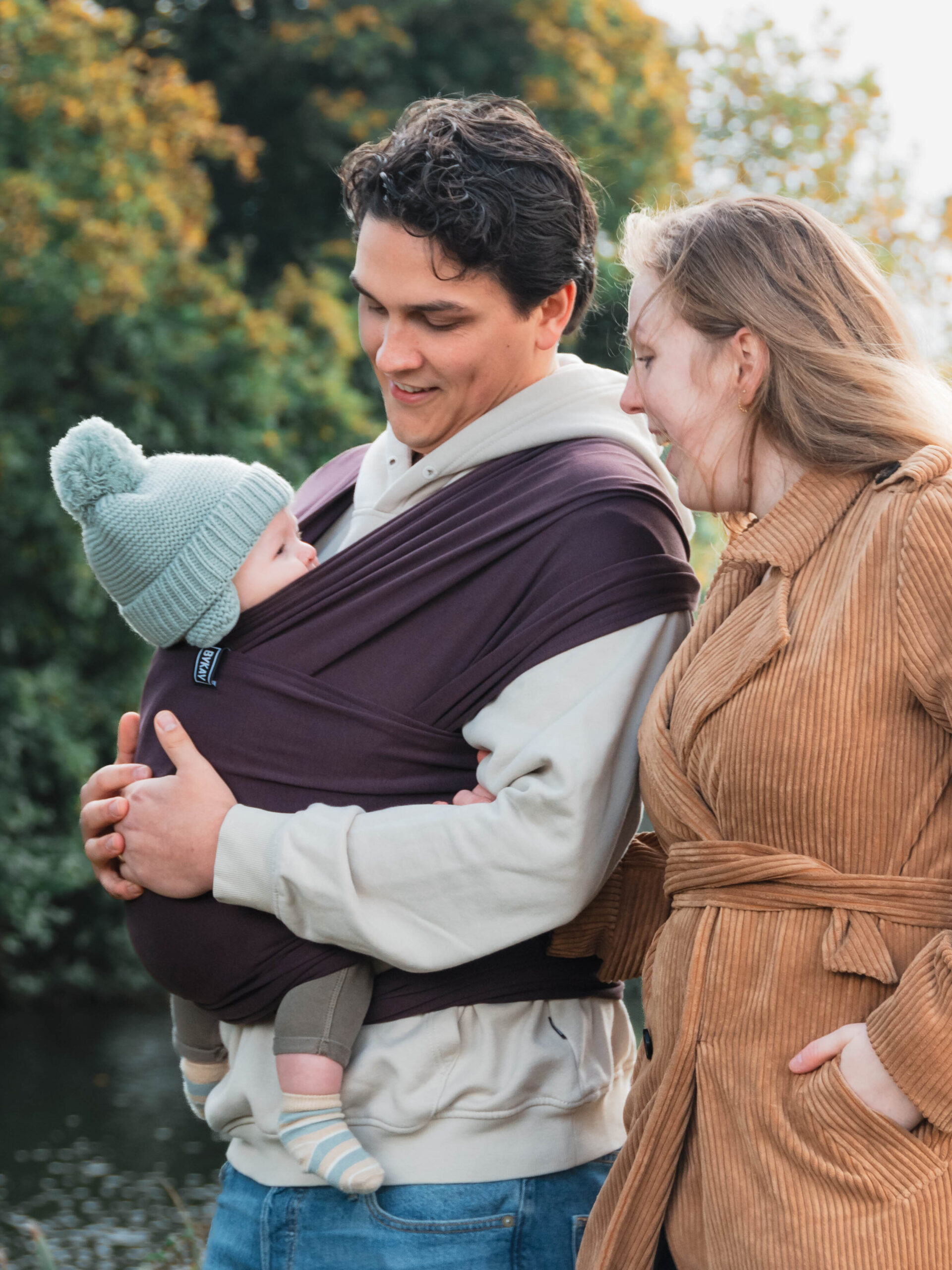
Your baby has arrived, and suddenly you discover that your hands are always full or that your baby actually wants to be with you all day long. That's perfectly normal. Babies love closeness, warmth, and the sound of your heartbeat. It makes sense that many parents choose to use a baby carrier. It's practical, cozy, and helps you both get used to this new adventure together.
But if you want to start carrying your baby, you may have some questions. Which baby carrier should you choose? Is my baby sitting comfortably? How do you carry a baby? When can you actually start carrying your baby? In this guide, we take you step by step through everything you need to know about ergonomic baby carrying.
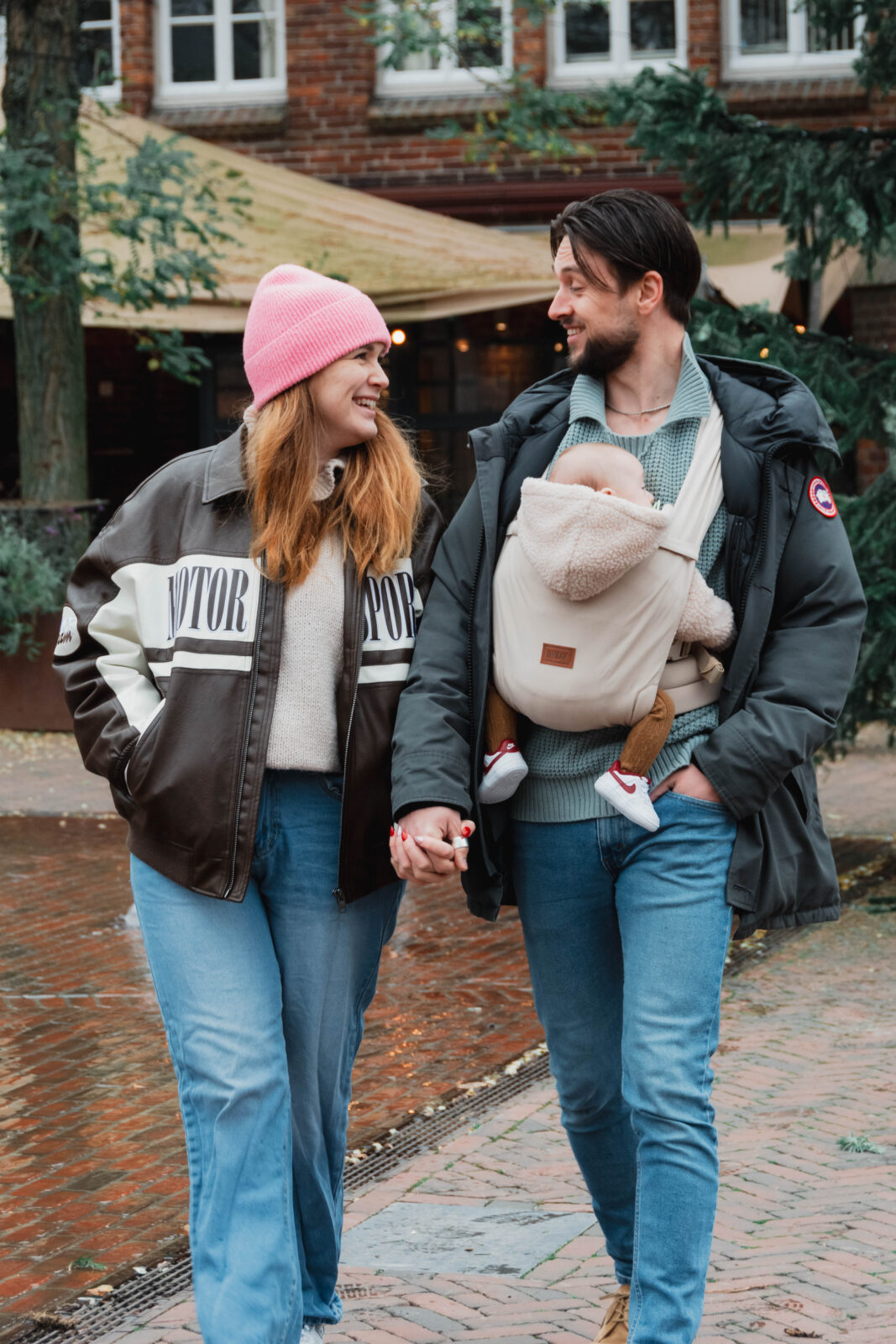
Ergonomic carrying means that your baby is seated in a natural position, with good support for their body. This is important for the development of your baby's hips, back, and neck, but also for your carrying comfort.
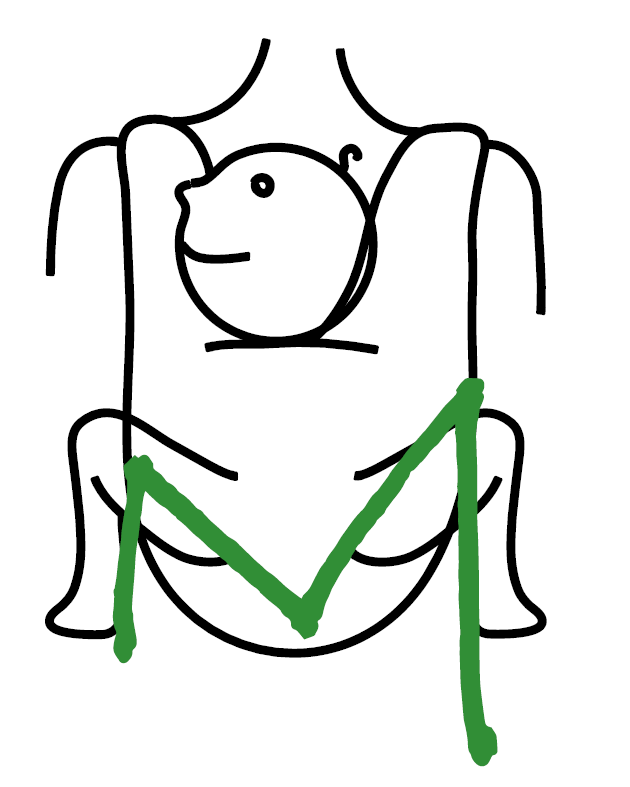
A baby carried ergonomically sits in the M-position (you may have heard of this before, but if not, read more below). This means that their knees are higher than their bottom and their back is slightly arched. Your baby is also at kissing height, their face has room to breathe freely, and they are close to your body. This makes your baby feel safe and secure, and allows you to keep an eye on them easily.
Ergonomics also plays an important role for you as a parent. A good baby carrier distributes your baby's weight evenly across your shoulders, back, and hips. This allows you to carry your baby comfortably, even during long walks or daily activities. Yes, you strain your muscles while carrying your baby. But if you strain your muscles in an ergonomic way, you are training them.
At first, you may experience some muscle pain. We recommend listening to your body and, if you feel it is necessary, gradually building up your carrying capacity. You won't be the first person with back problems to experience less pain by continuing to carry. It will strengthen your back and abdominal muscles!
In most cases, you can carry your baby from birth. The baby carrier must be suitable for newborns, such as the baby carriers from ByKay.
In the first few months, it is especially important that your baby is well supported and snug against you. It is also important to pay attention to your own comfort. You can gradually build up to carrying your baby for longer periods by starting with short moments.

There are several ways to carry your baby. Which option suits you best depends on your preference, experience, situation, and lifestyle.
A baby sling is soft and fully adjustable to fit you and your baby. This makes a baby sling ideal from birth. Many parents find it takes a little practice to master the knots, but once they do, they experience a great deal of comfort and flexibility.
A baby carrier is quick and easy to use. You can easily adjust the carrier using the clips and adjustable straps. Many baby carriers, such as the Click Classic and Click Deluxe, grow with your baby. This means you can use them right from birth and long after. If you are looking for a baby carrier that fits your newborn (and premature or dysmature baby) perfectly without compromise, then the Tiny Click is a great option!
A MeiTai combines the best of both worlds: the convenience of a baby carrier and the comfort of a sling. You fasten the waist strap (as with a baby carrier), but tie the shoulder straps (as with a sling). This makes it highly adjustable and comfortable to wear.
A hip carrier, such as the Hipsling or Ringsling, is particularly useful for short periods of carrying. For example, a quick trip to the supermarket, a short walk with the dog, or while doing household chores.
Many parents find this exciting at first, which is quite understandable. Fortunately, there are a few simple checkpoints.
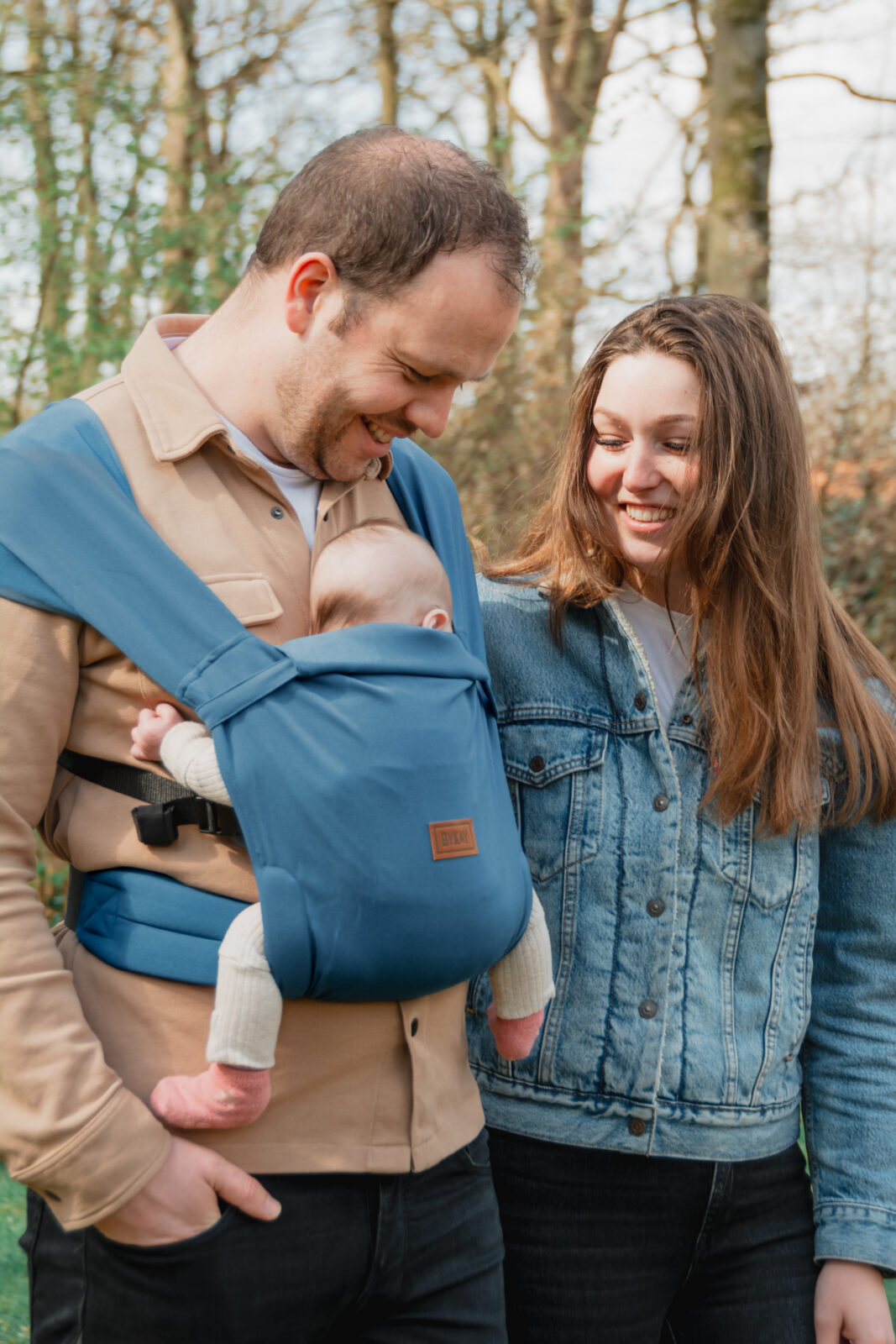
Safety always comes first. Make sure your baby's face is always visible. Make sure there is no fabric covering their nose or mouth. It is especially important for newborns that their neck and back are well supported. All ByKay baby carriers provide optimal neck and back support, partly due to the integrated neck support in the design. Make sure the baby carrier is properly adjusted to your bodies.
Carrying your baby is not only practical. It also offers many benefits for your baby and for you.
Carrying your baby gives them a sense of security and comfort. Your baby can hear your heartbeat, feel your movements, and smell your familiar scent. This can help regulate their temperature, breathing, and heart rate. Babies also tend to fall asleep more easily and peacefully when being carried.
A baby carrier literally frees up your hands. This is ideal if you want to do things at home, go for a walk, or go out without a stroller. Many parents also find that carrying their baby helps to strengthen the bond with them. Carrying your baby releases a lot of oxytocin, and this "cuddle hormone" plays an important role for both you and your little one.
The perfect baby carrier is different for everyone, so choosing a baby carrier is too. There are a number of factors to consider.
To find out which baby carrier suits you best, you can use the selection guide at bykay.com.
It can help to try out a baby carrier first. Would you prefer to try it out for a little longer? With the ByKay carrying subscription, you can rent a baby carrier. This allows you to take your time trying out which baby carrier suits you best. You choose the minimum rental period yourself and use the baby carrier for as long as you want. If you want to try something else or are done carrying, you can simply send it back.
Starting to carry doesn't have to be perfect. Think of it as something you learn together.
Babywearing is a wonderful way to be close to each other while continuing with your daily life. It's normal to have to experiment a little at first to find what works for you. With the right baby carrier, an ergonomic posture, and a little practice, babywearing will soon become a familiar part of your day. Would you like to find out which baby carrier suits you best?
Check out the different options, try what suits you, and remember: there is no perfect way, only your way.