When you first hear about an ergonomic carrier, you might think of a fancy baby carrier, but what exactly does that mean? In the world of parenting and carrying comfort, the concept of ergonomic carrying is a fundamental principle: not only for your baby’s comfort and development, but also for your own physical well-being while carrying.
This article explains what ergonomic babywearing entails, why it’s so important, and what to look for when choosing a sustainable and healthy babywearing solution, such as anergonomic baby carrier.
What is ergonomic babywearing? In short, it means holding your baby in a way that is both physically comfortable and developmentally beneficial—for your child and for you. An ergonomic carrier ensures that your baby is positioned naturally, supporting the physical development of his or her body. This isn’t just about comfort; above all, it’s about providing safe and healthy support for the hips, back, and neck.
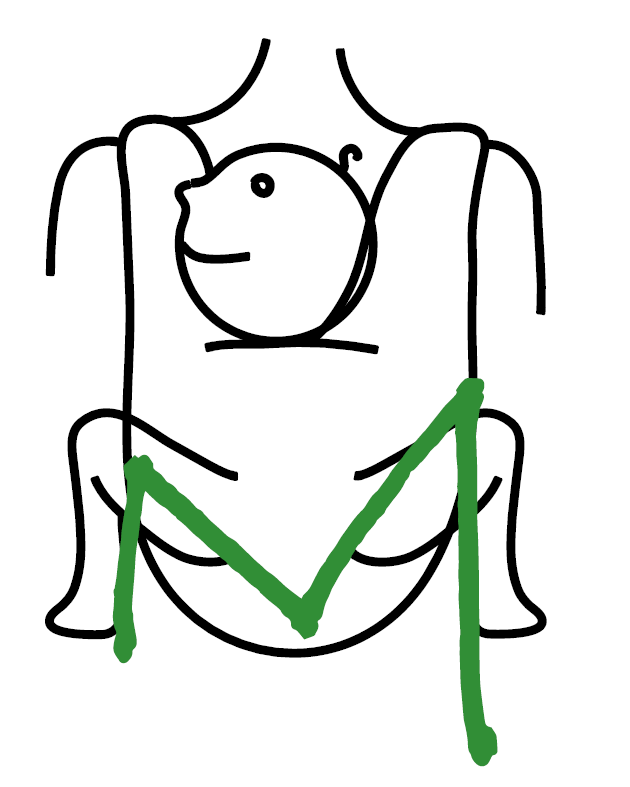
The basic principle of ergonomic babywearing is a position in which your baby’s legs are well supported. The legs form an M-shape, a position also known as the frog position. In this position, the knees are higher than the bottom, and the hip joints are optimally supported, with the fabric spread from one knee pit to the other. This contributes to healthy hip development and is a hallmark of a good ergonomic carrier.
An ergonomic carrier offers benefits in several ways. For your baby, this means that the position they assume is virtually the same as their natural position—just as they were in your womb. This position is not only comfortable but can also promote calm breathing, a sense of security, and better development.
Voor jou als (nieuwe) ouder, betekent ergonomisch dragen dat je gewicht gelijkmatiger wordt verdeeld over je lichaam. In een goed ontworpen draagdoek of draagzak rust het gewicht niet alleen op je schouders, maar wordt het gewicht verdeeld over je gehele core. Hiermee belast je je spieren op een ergonomische manier, waardoor je buik- en rugspieren juist traint. Hierdoor worden rug-, nek- en schouderklachten verminderd.

An ergonomic baby carrier offers a number of practical and important benefits:
Not all baby carriers or slings labeled as "ergonomic" are actually ergonomic. Since the term "ergonomic" is not legally protected, any product can use this term without necessarily meeting ergonomic standards.
Make sure the baby carrier is certified to EN 13209:2 (European standard) or ASTM (applicable in the U.S. and elsewhere) and therefore meets all safety requirements.
A truly ergonomic baby carrier should ideally meet the following criteria:
Any parent who wants to carry their baby safely and comfortably will benefit from ergonomic babywearing. Whether you’re a first-time parent or already have experience with babywearing, the right ergonomic carrier allows you to start carrying your baby from day one—and there are even options available if your baby was born prematurely or with low birth weight.
The more you practice, the easier it gets and the better you’ll do—because it really doesn’t have to be perfect. Good is good enough to start with; you can add the finishing touches later. Follow the instructions and reach out if you have any questions.
As your baby grows, adjust your ergonomic baby carrier so that your baby is always in the best possible position.
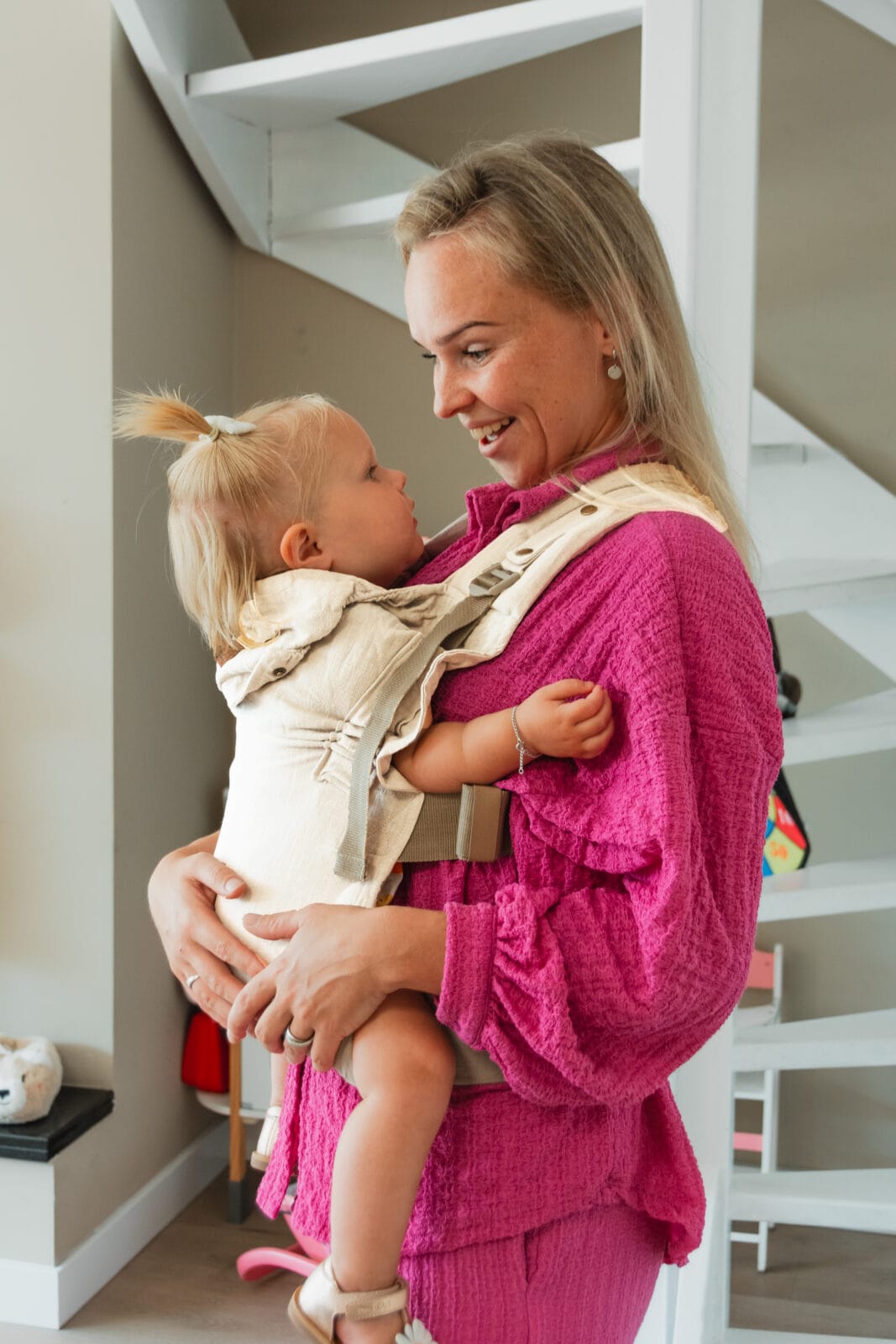
An ergonomic carrier is much more than just a baby carrier. It’s a well-thought-out design that takes into account natural body postures—both for your baby and for you.
By using ergonomic babywearing as your starting point, you can not only carry your baby comfortably and safely, but you also support their physical development and keep your own body healthy during this wonderful time.
A truly ergonomic baby carrier is therefore an investment in comfort, health, and bonding—for both of you.
